Textile Installation
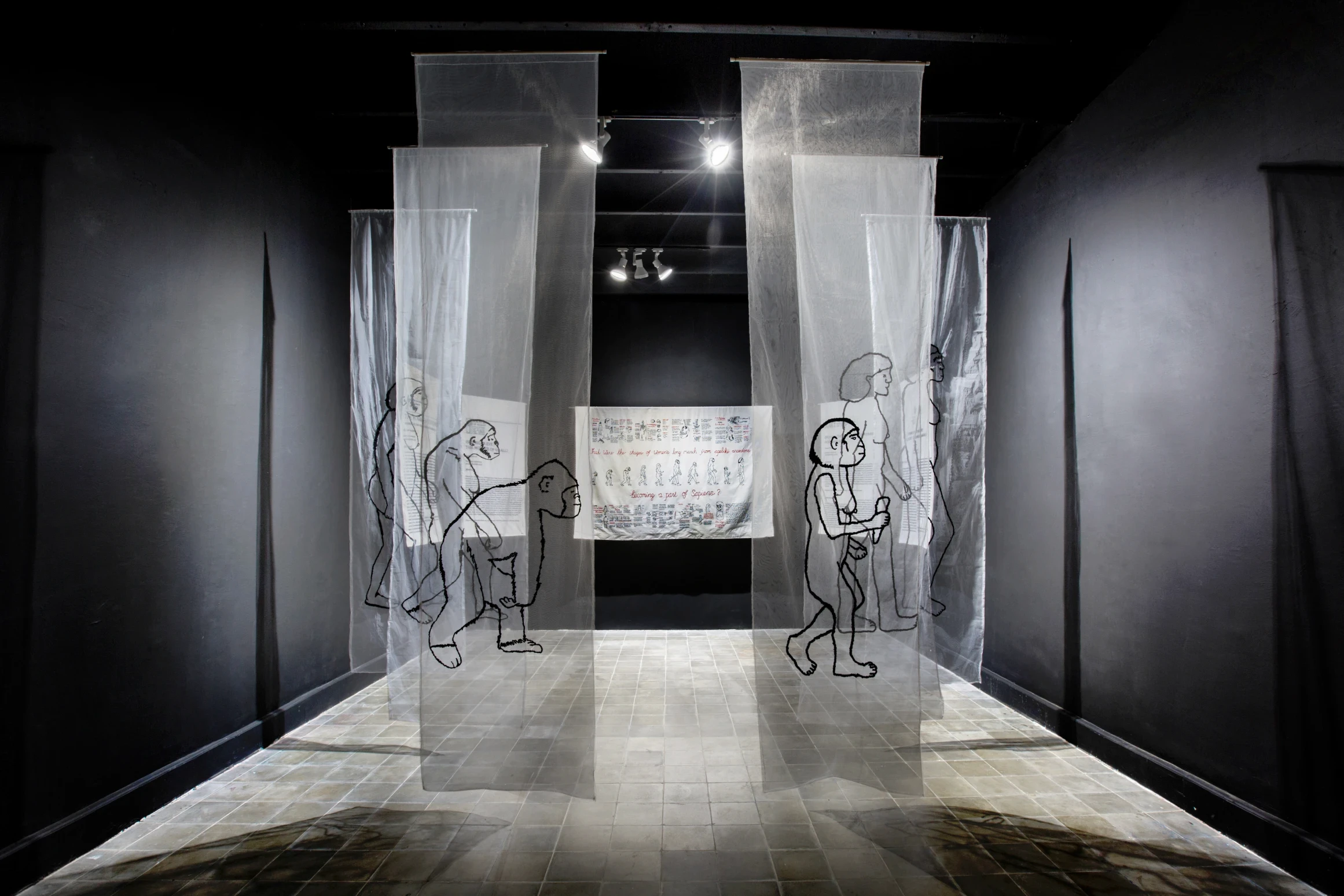
Photo Courtesy: Jogja Biennale Foundation
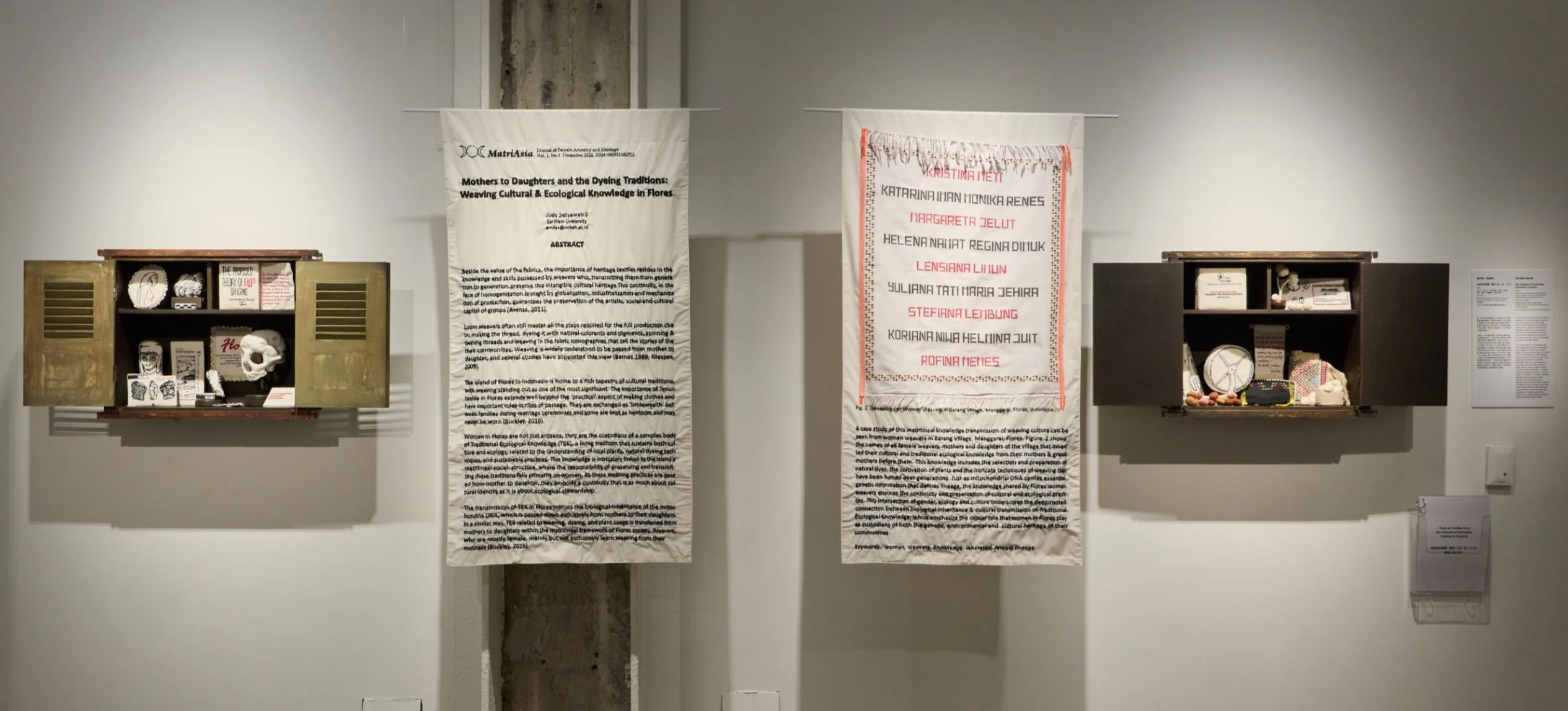
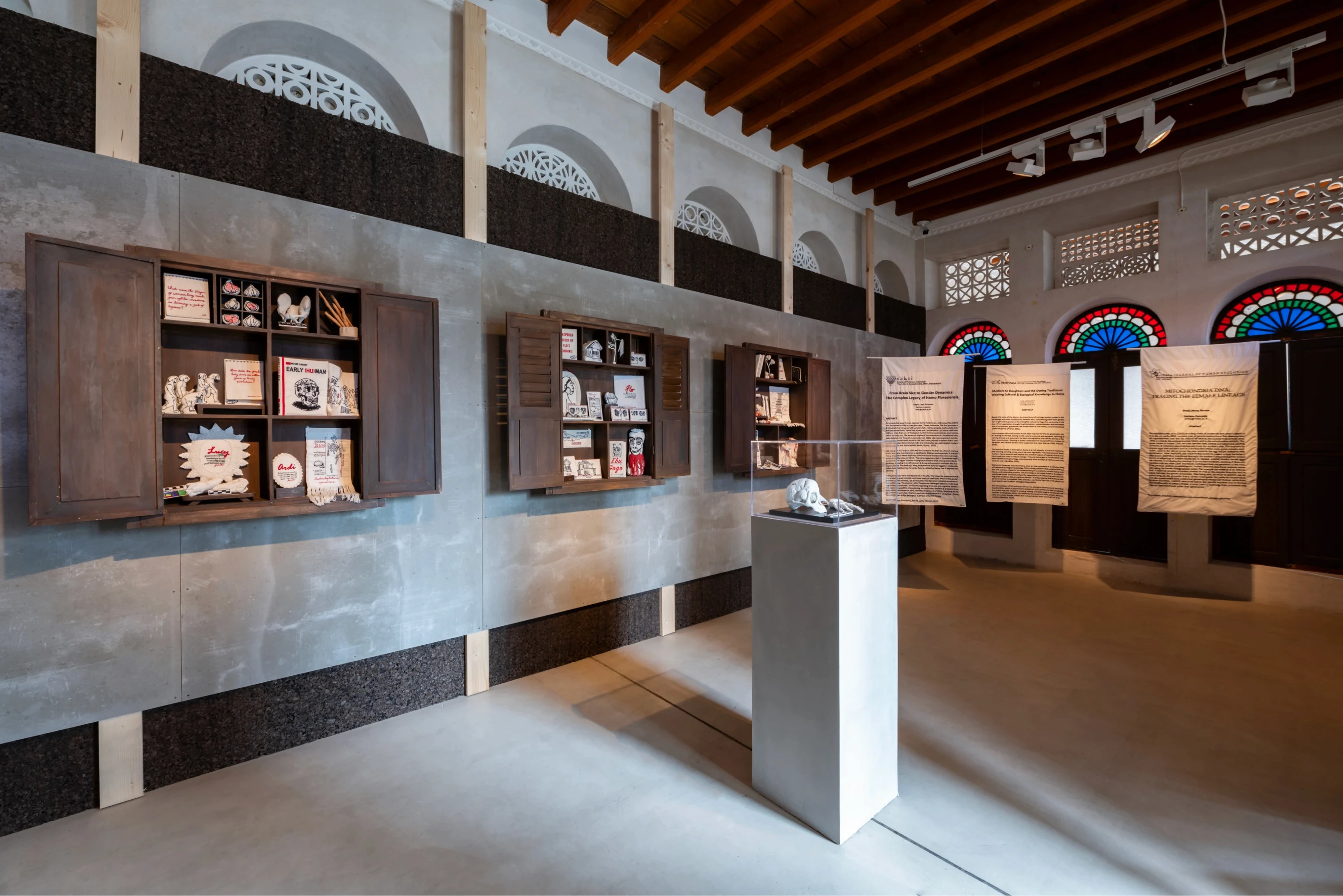
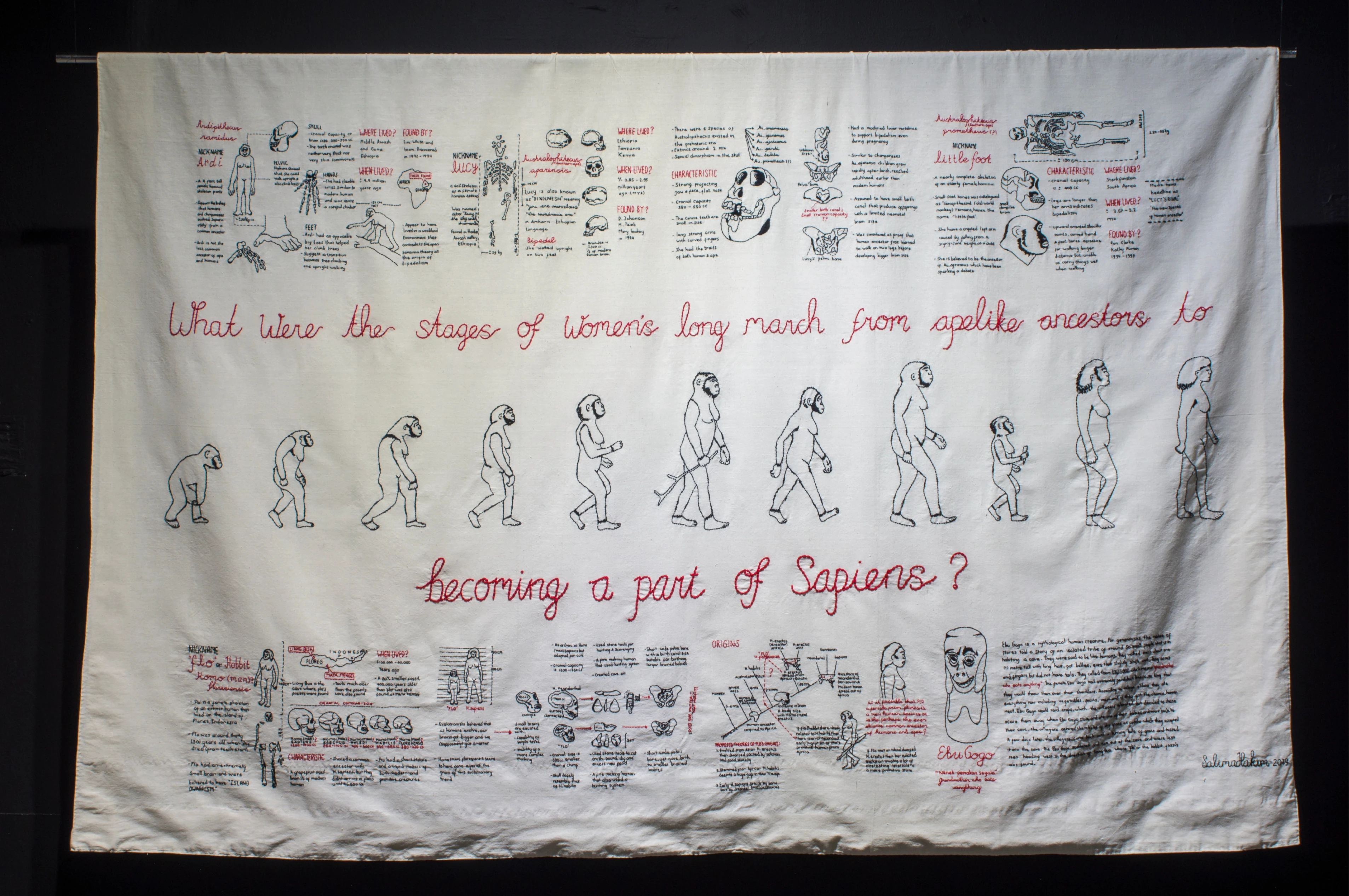
Stemming from the Herstory series, this work emphasizes on the findings of Homo Floresiensis, found in Liang Bua cave in the island of Flores, Indonesia. Genetic study done by tracing female lineage DNA of prehistoric fossils, such as the Homo Floresiensis and its relation to the Melanesians genetic heritage, reveals many intriguing facts and possibilities of human evolution and new ways of looking Asia as the center of archaic diversity.
This work also touches on the notion that, historically in the context of producing scientific knowledge, women have been limited to secondary roles as translators, illustrators and are often determined by kinship relations or by virtue of marriages, limiting the possibilities of pertaining authorship. If in order to gain validity, knowledge distribution must often conform to western education standards, this work appropriates the formality of scientific publication and stitched together data finding, articles, journals, stories, documents, headlines and compile these archeological and scientific findings of prehistoric female fossils into fictional scientific journals.
Year
2021
DIMENSION
Dimension Varies
MATERIAL
Tulle, Calico Fabric, Embroidery Thread
EXHIBITION
Jogja Biennale XVI Equator #6, Indonesia with Oceania.
06 October – 14 November 2021
Curator
Elia Nurvista, Ayos Purwoaji
Venue
Jogja National Museum, Jogjakarta, Indonesia
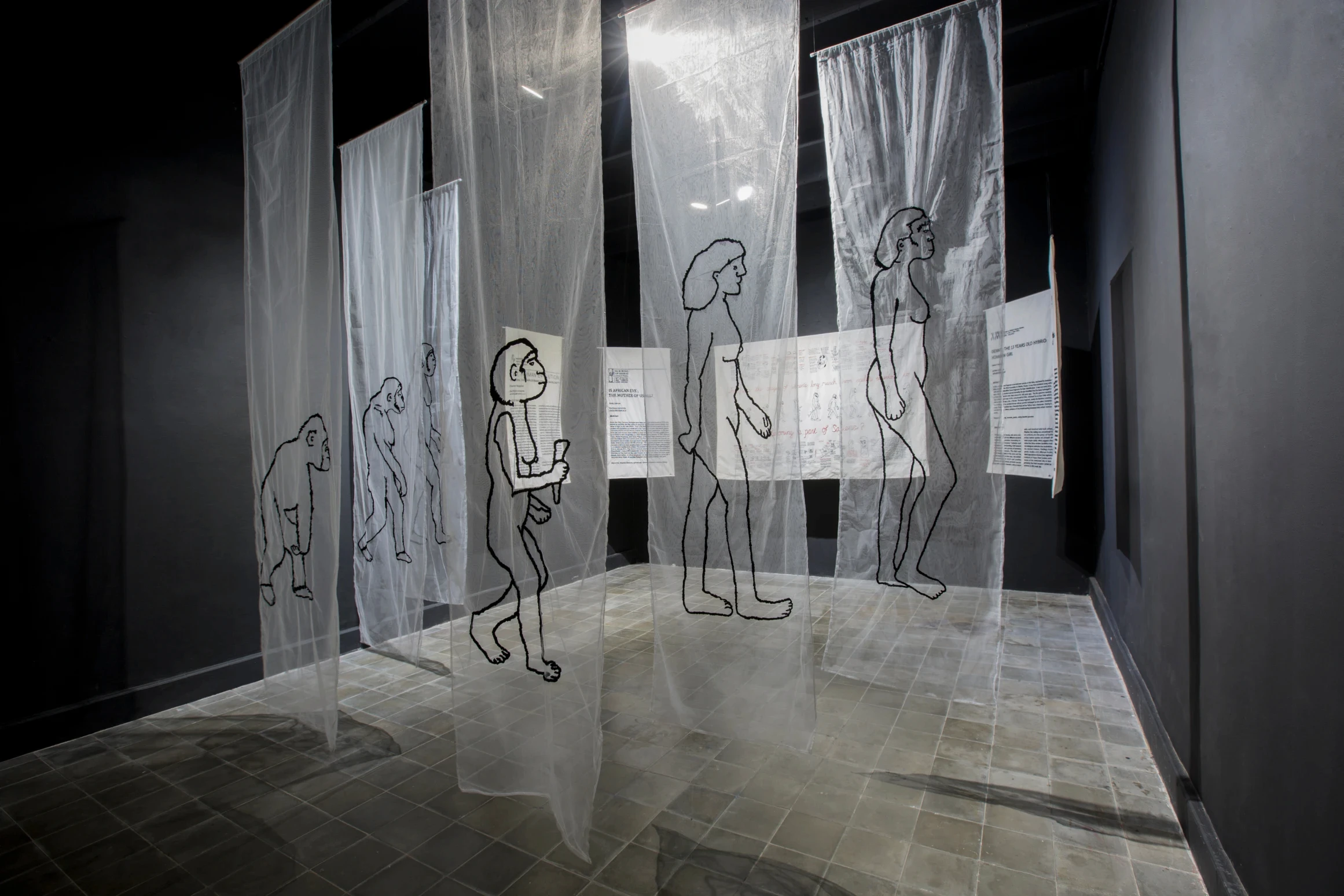
Photo Courtesy: Jogja Biennale Foundation
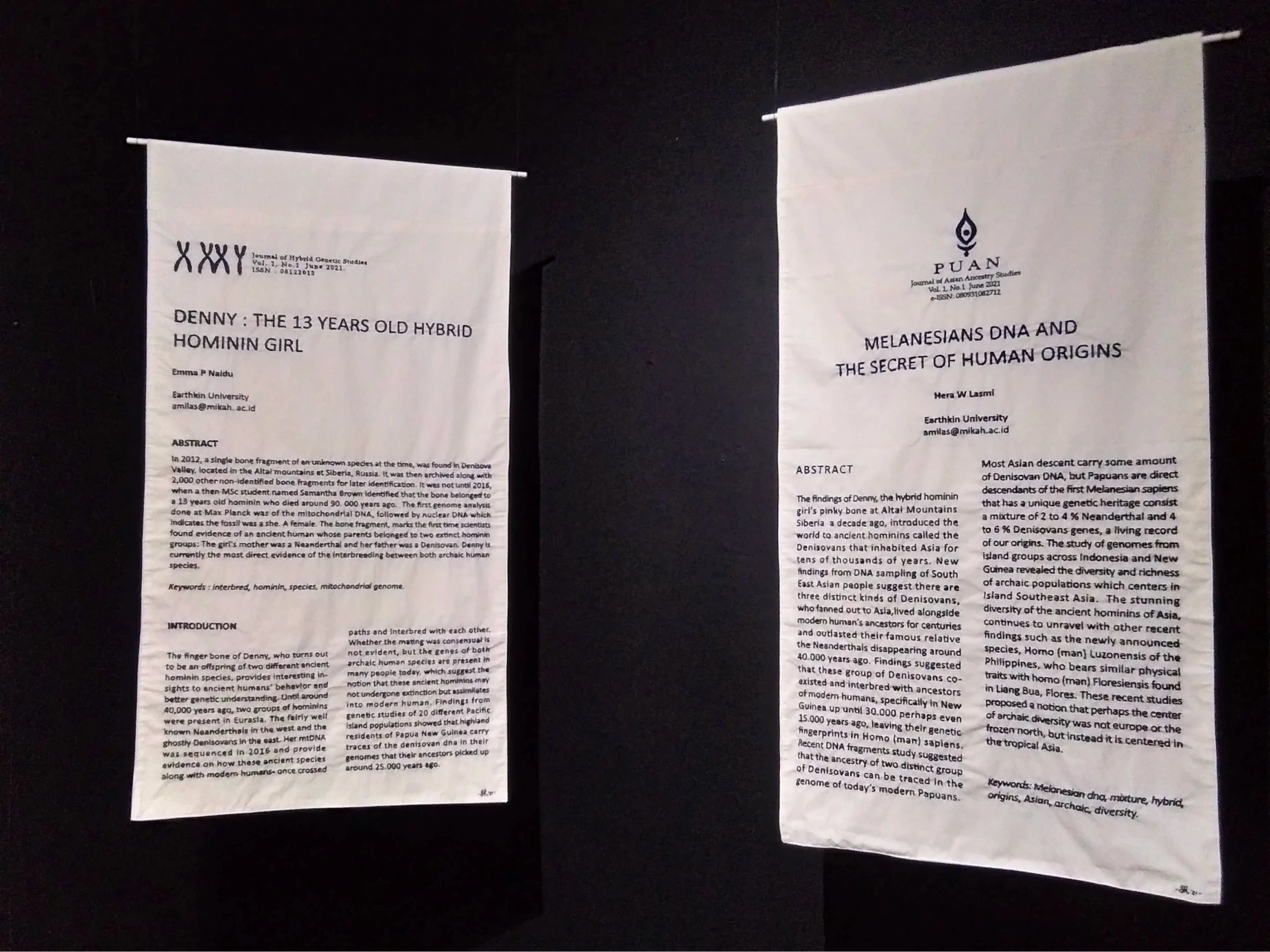
Photo Courtesy: Jogja Biennale Foundation
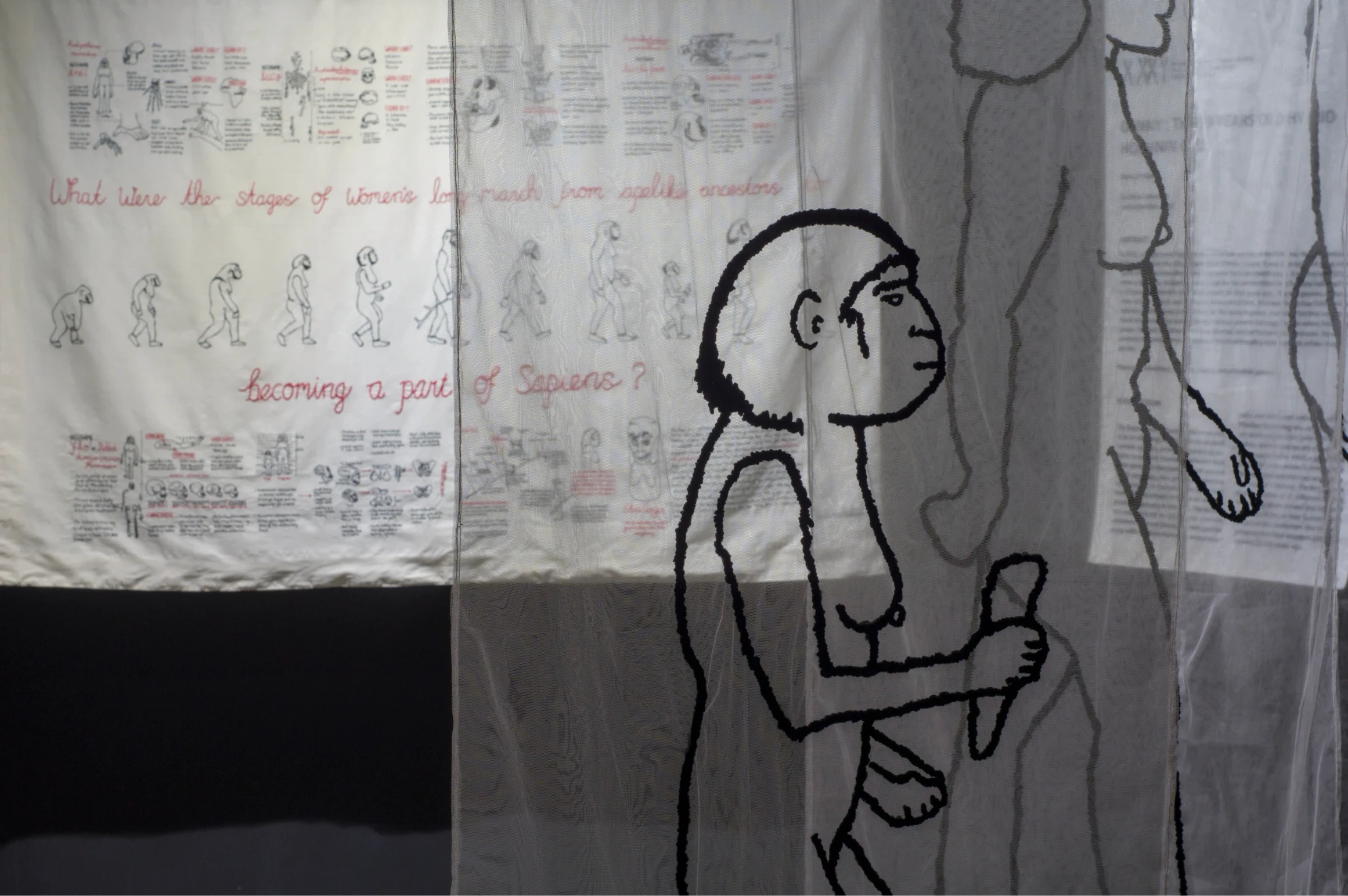
Photo Courtesy: Jogja Biennale Foundation
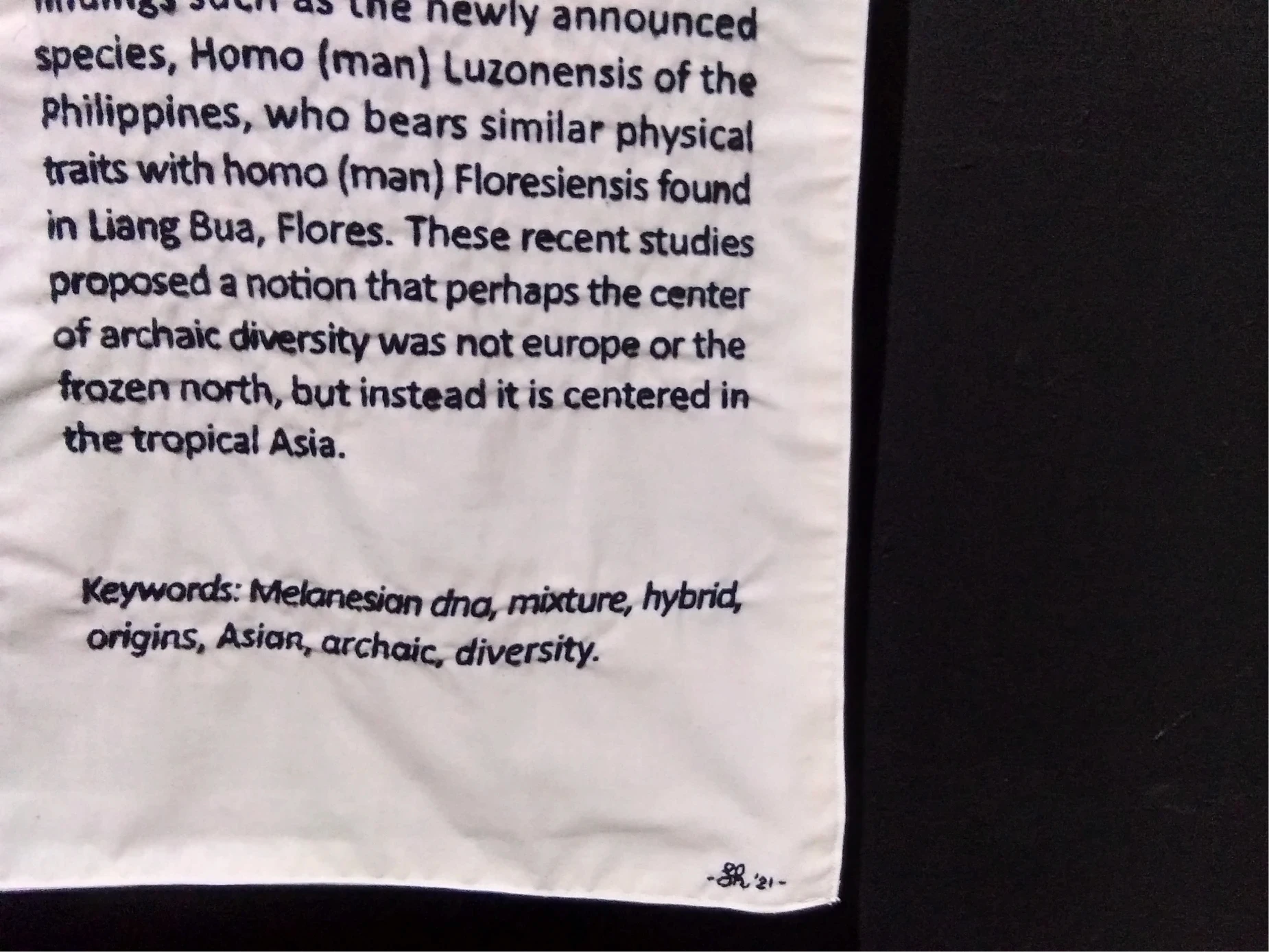
Photo Courtesy: Jogja Biennale Foundation
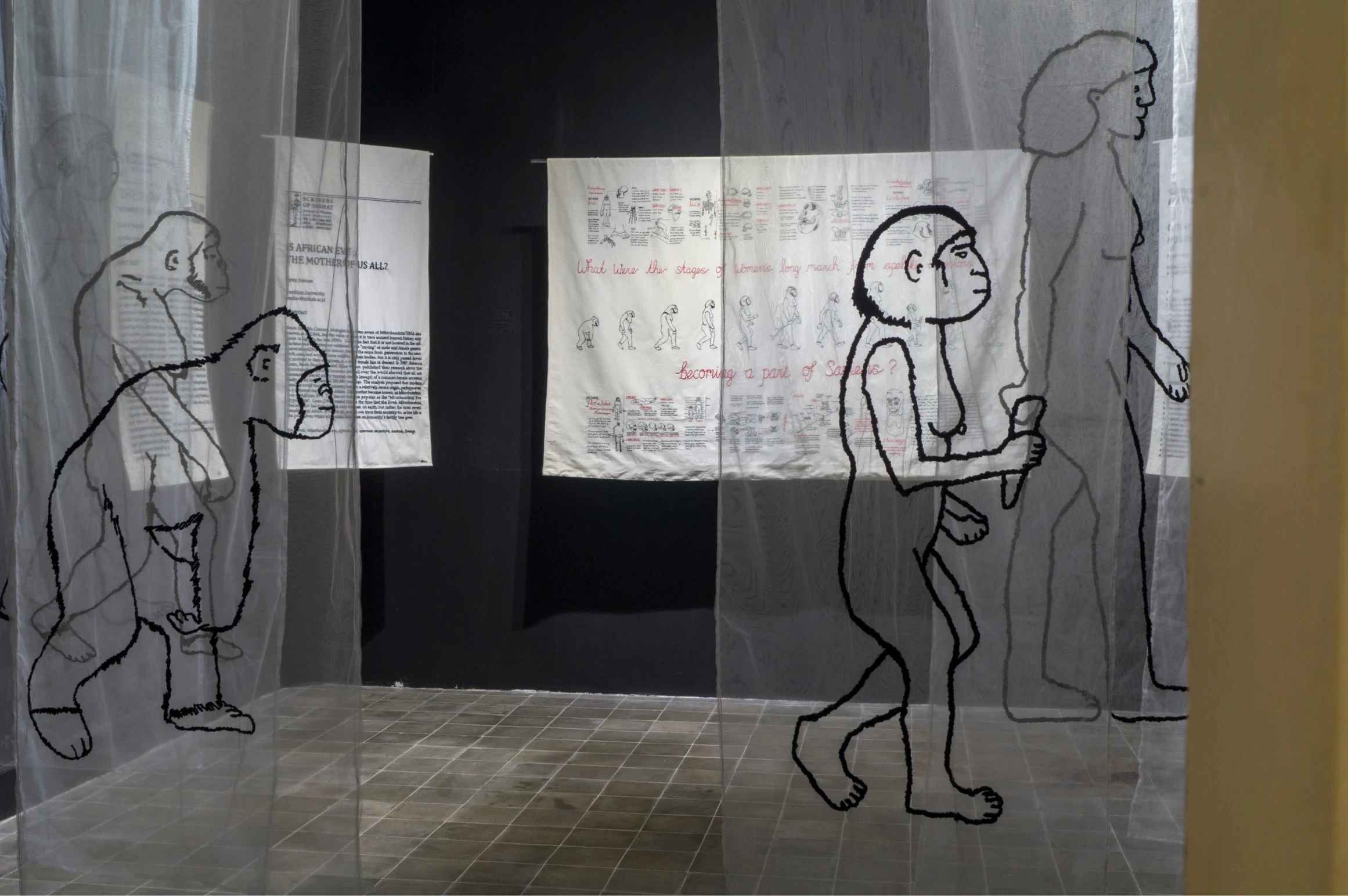
Photo Courtesy: Jogja Biennale Foundation
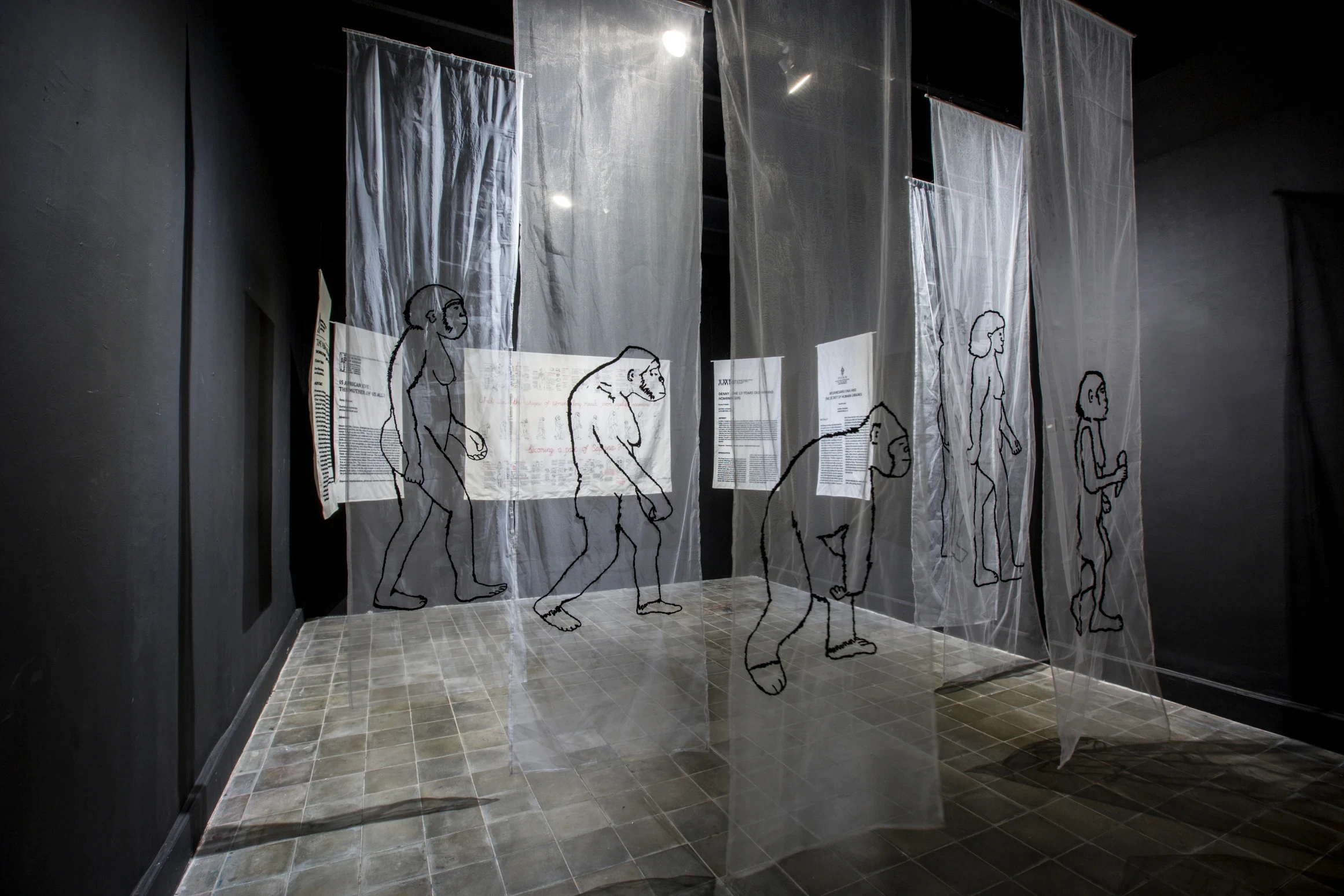
Photo Courtesy: Jogja Biennale Foundation
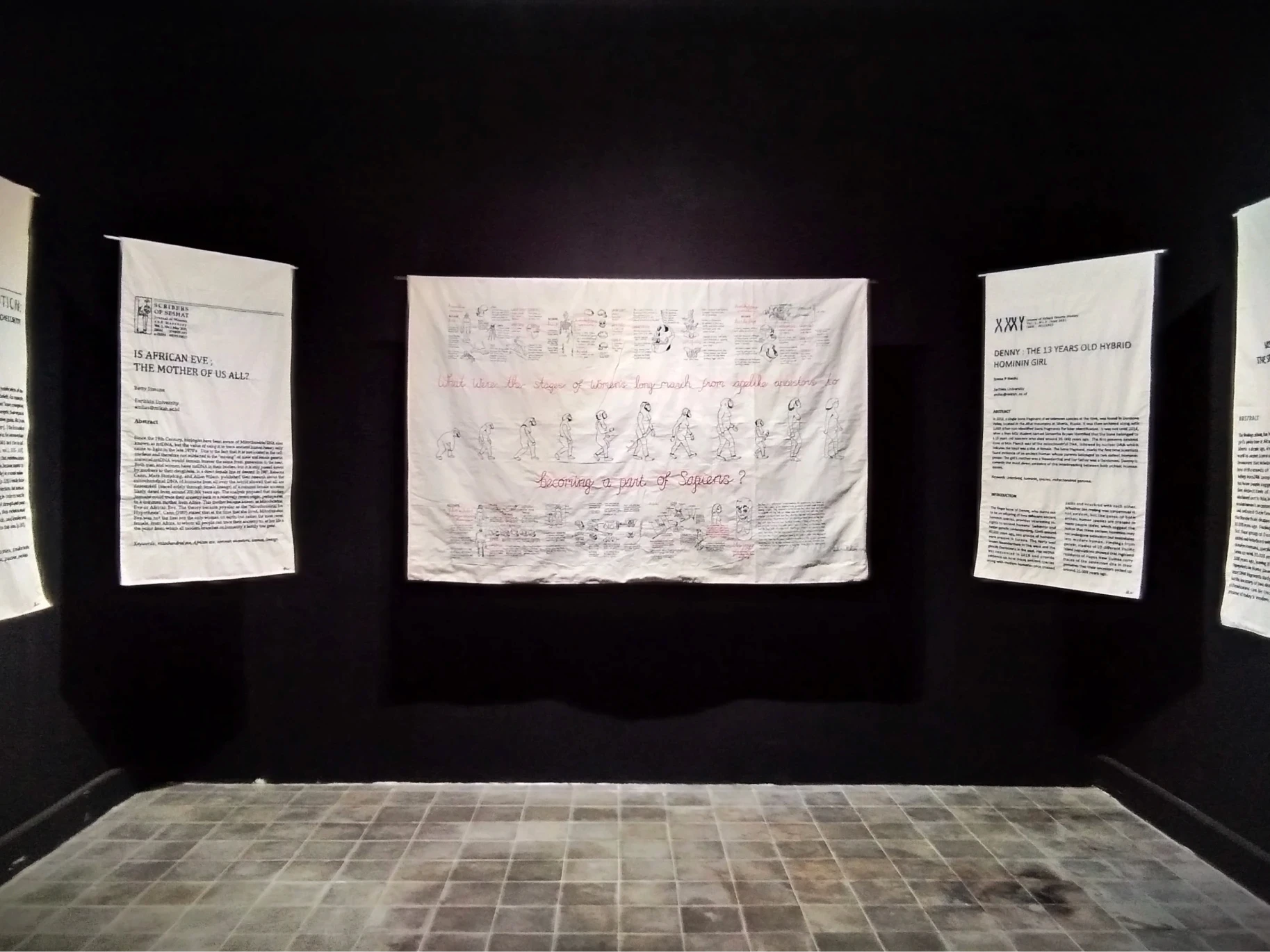
Photo Courtesy: Jogja Biennale Foundation